How I'm Making an Animated Film with AI: The Story of Tiny Boo
I had wanted to make something of my own — something warm — for a long time.
YouTube video
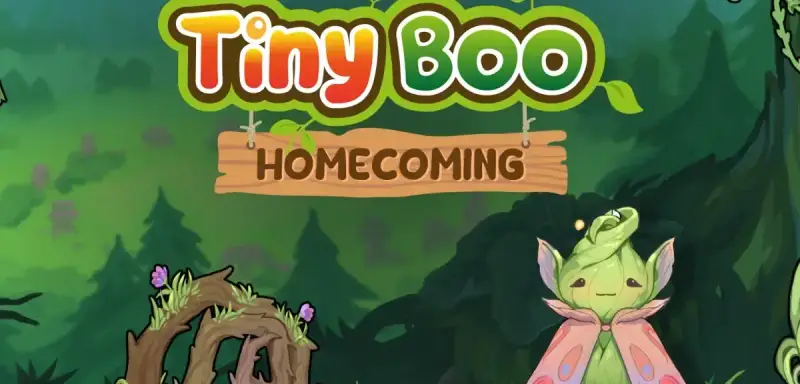
I had wanted to make something of my own — something warm — for a long time. I already had a game, Tiny Boo: Homecoming, about a tiny creature named Boo trying to find his way home through the great big, magical world of Lumia. And at some point it clicked: what if I brought this world to life not only in a game, but in an animated film? Launch a YouTube channel where Boo lives out small stories — and make it not with a studio of twenty people, but together with an AI.
That's how the Tiny Boo project started. In this article I'll honestly walk through how the idea came to me, how we built everything step by step from concept to a finished pilot, which tools we used, and what I learned along the way.
The idea: don't invent from scratch — bring to life what already exists
I made one decision right away: not to spin up a brand-new world, but to use an IP I already had — Boo and the world of Lumia. The character already had a story ("swept far from home, needs to get back") — a perfect basis for a journey series.
Then came the key choice, and as it turned out, the most important one: make the film wordless — like Pingu or Larva. Three reasons:
- no language barrier — the channel works in any country;
- no struggling with voiceover and lip-sync in AI video;
- simpler and cheaper to produce.
This single decision shaped absolutely everything that followed.
How we worked, step by step
I didn't rush straight into "generating video." First my AI assistant and I built the foundation — and it paid off.
1. Concept and rules. We defined the format (short 2–3 min episodes + Shorts), the audience (family, all-ages), the tone (cozy + light adventure), and the core feeling of every episode — endearment. All of it went into a series bible.
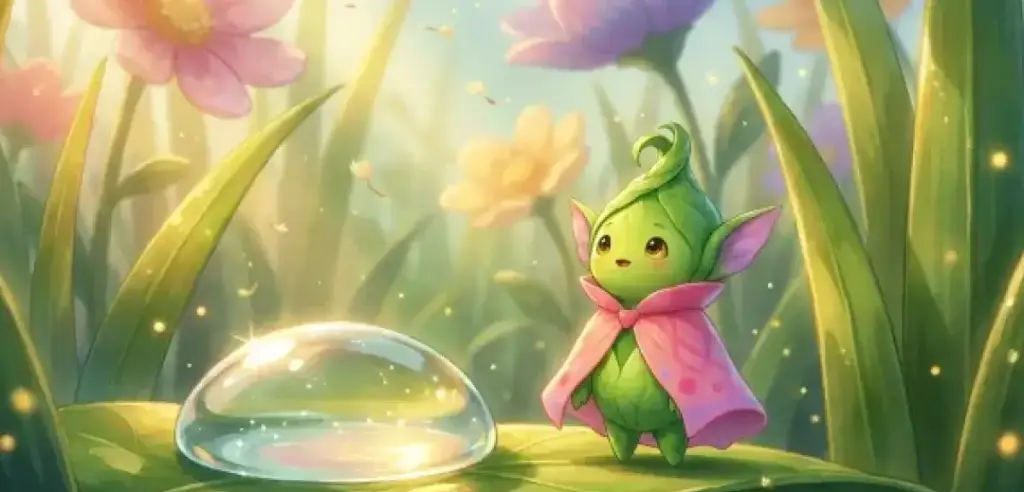
2. The world. We described Lumia as a microworld: grass blades are trees, a dewdrop is a lake, a mushroom is a building. For each location we made a "passport" with its palette and scale — so shots wouldn't drift in color.
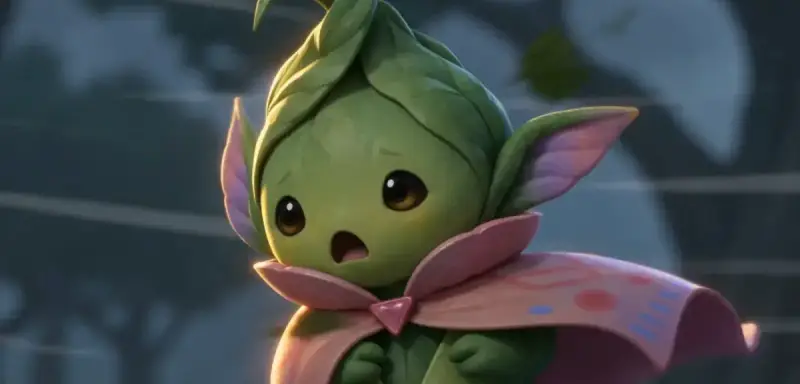
3. The character — and his "lock." The most important thing in AI animation is keeping the hero looking the same in every frame. We described Boo in detail (a flower-bud forest spirit with big eyes and a glowing cape) and built a character lock: reference images — front, profile, an expression sheet. Without it, the AI draws a "new" character every time.
4. The story. We chose an anthology format with a season-long thread: each episode stands alone, but together they carry Boo home. For the pilot we picked the simplest, most beautiful story — "The Dewdrop": Boo wants a sip from a giant dewdrop, and it turns into a tiny adventure.
5. Shot breakdown and prompts. We split the pilot into 21 shots and wrote a full prompt for each — character, environment, camera, light, sound and VFX (modern AI video can generate audio right away). We invented a "fixed part + variable part" structure: style, character and palette are copied into every shot; only the action and camera change. That keeps the whole film in one consistent style.
6. Music. We generate the theme and score separately — with prompts for wordless, warm, acoustic music. We set one "Boo theme" as the channel's sonic logo.
7. Brand and channel. Name, the slogan "Tiny creature, big world," avatar, banner, a text-free thumbnail template, intro and outro. We also wrote the channel description and metadata for the first video.
The tools
- AI assistant (Claude) — co-director and producer: helped make decisions, wrote the bible, script, prompts, and structure.
- ChatGPT — character image generation (master reference, turnaround, expressions).
- Seedance 2 — generating the actual video shots (with sound and effects built in).
- Suno — music and theme.
- DaVinci Resolve / Clipchamp — editing and mixing.
What I learned along the way
- Structure beats inspiration. An hour spent on the bible and the character lock saves dozens of hours of re-generations.
- Consistency is enemy #1 in AI animation. You beat it with reference images and a single prompt "skeleton."
- Wordless is a superpower — global reach and a far simpler production.
- You can't generate music inside every clip — otherwise the pieces won't cut together. One theme, one track at the edit stage.
- AI isn't a "make it pretty" button — it's a co-author. It's strongest where you set the constraints and make the calls, and it holds the entire mass of detail.
The result
What I have now is a complete production package for the pilot: concept, world, a character with ready references, script, shot breakdown, prompts for every shot, music, brand assets, and a set-up channel — Tiny Boo. Essentially, from scratch and with just an AI, we put together what usually takes a small team.
Next up: assembling the pilot, "The Dewdrop," and starting to post. But that's another story — one I'll tell too.
If you want to watch Boo find his way home, here's the channel: Tiny Boo. Tiny creature, big world. 💚