ChinaJoy 2026: What I Brought Back From Shanghai
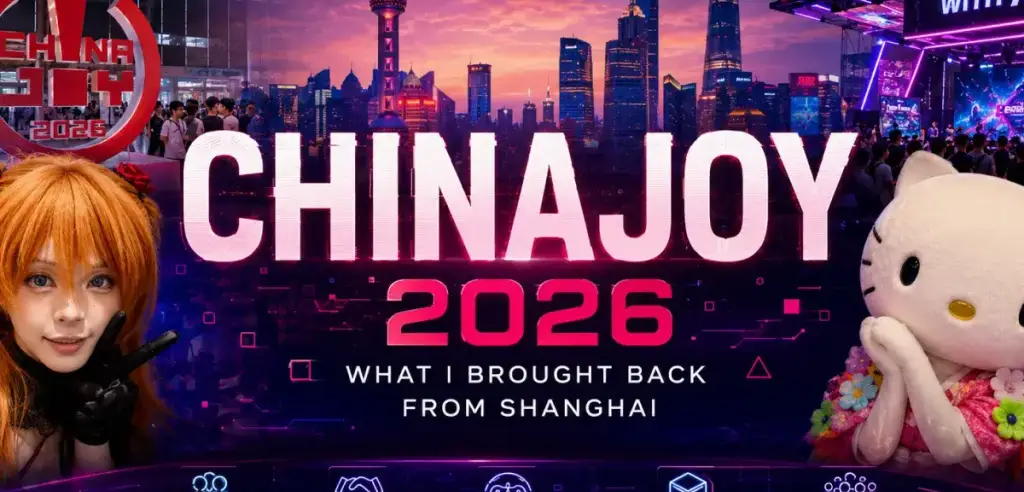
Three days at ChinaJoy 2026 — the developer conference, the B2B floor, and the consumer halls. Who I met, what the AI tooling vendors are actually selling, and what surprised me.
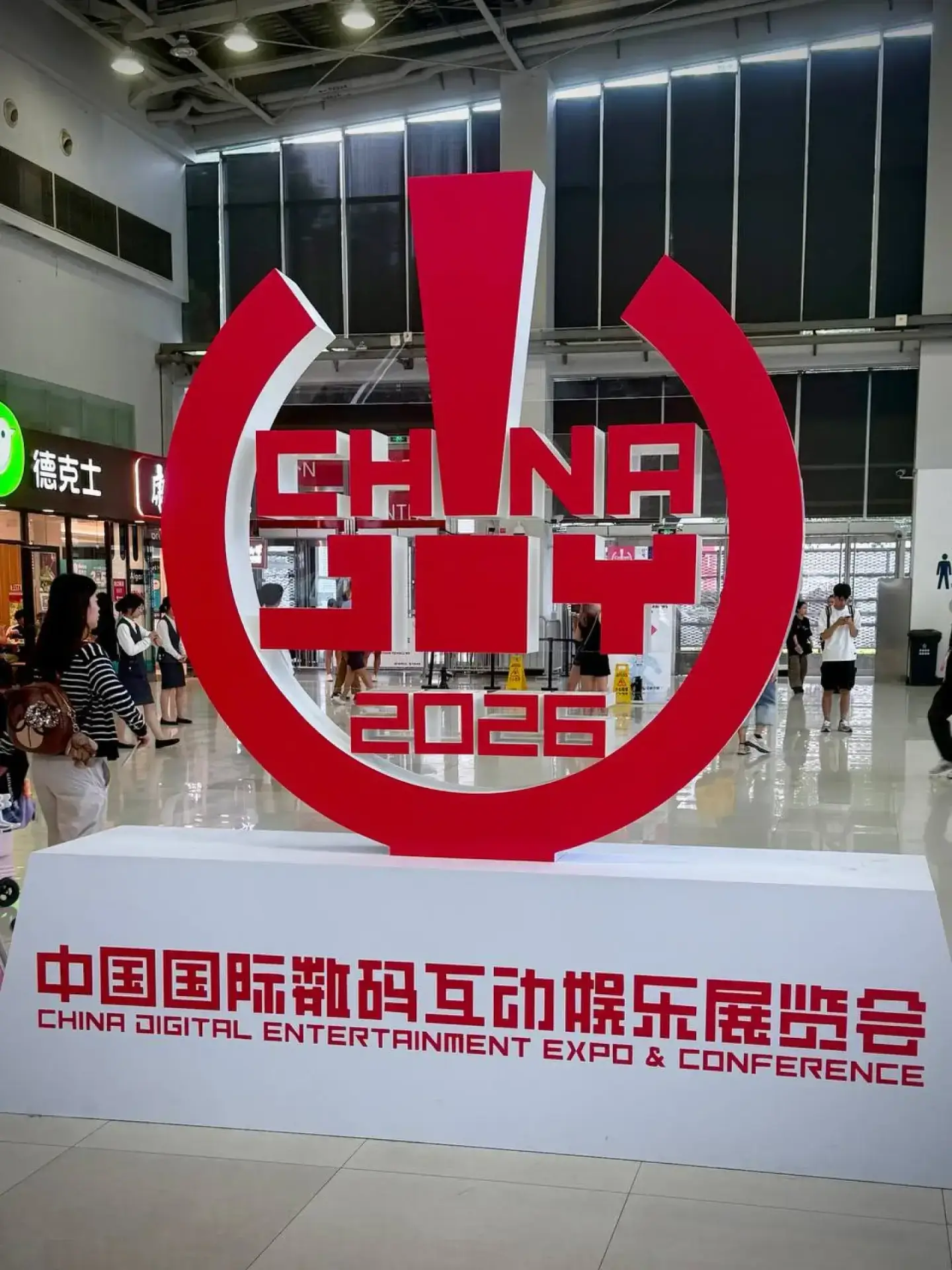
I spent the first days of August at the Shanghai New International Expo Center for ChinaJoy 2026. Three days, three completely different events wearing one badge: a developer conference, a business floor, and a consumer show that felt closer to a music festival than a trade fair.
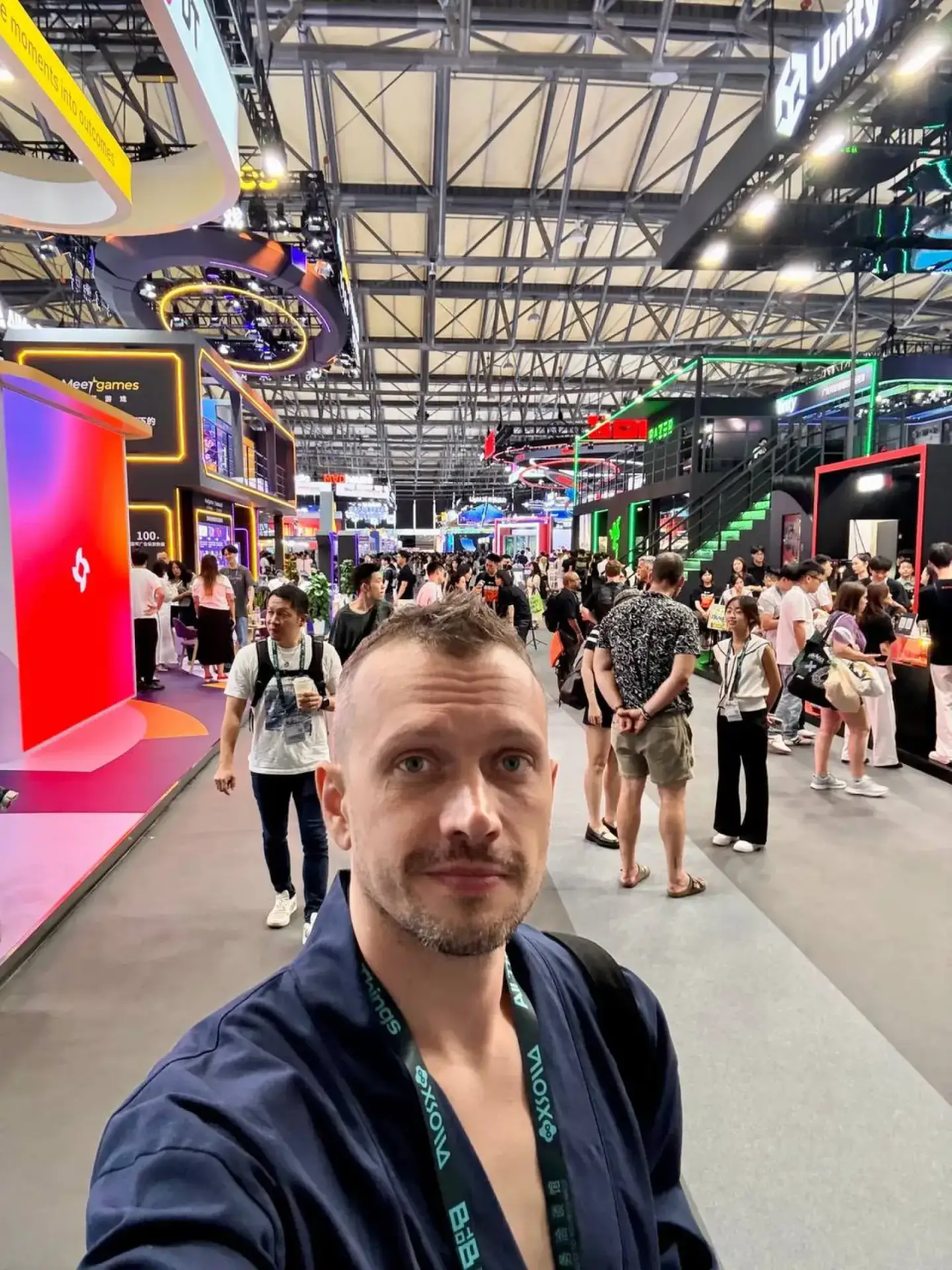
This year ran from July 31 to August 3 under the theme "Level Up With AI". Around 900 companies from 39 countries took part, 275 of them foreign, across more than 140,000 square metres. The numbers are easy to quote and hard to feel until you have walked the halls and your legs tell you about it.
Day one: the conference
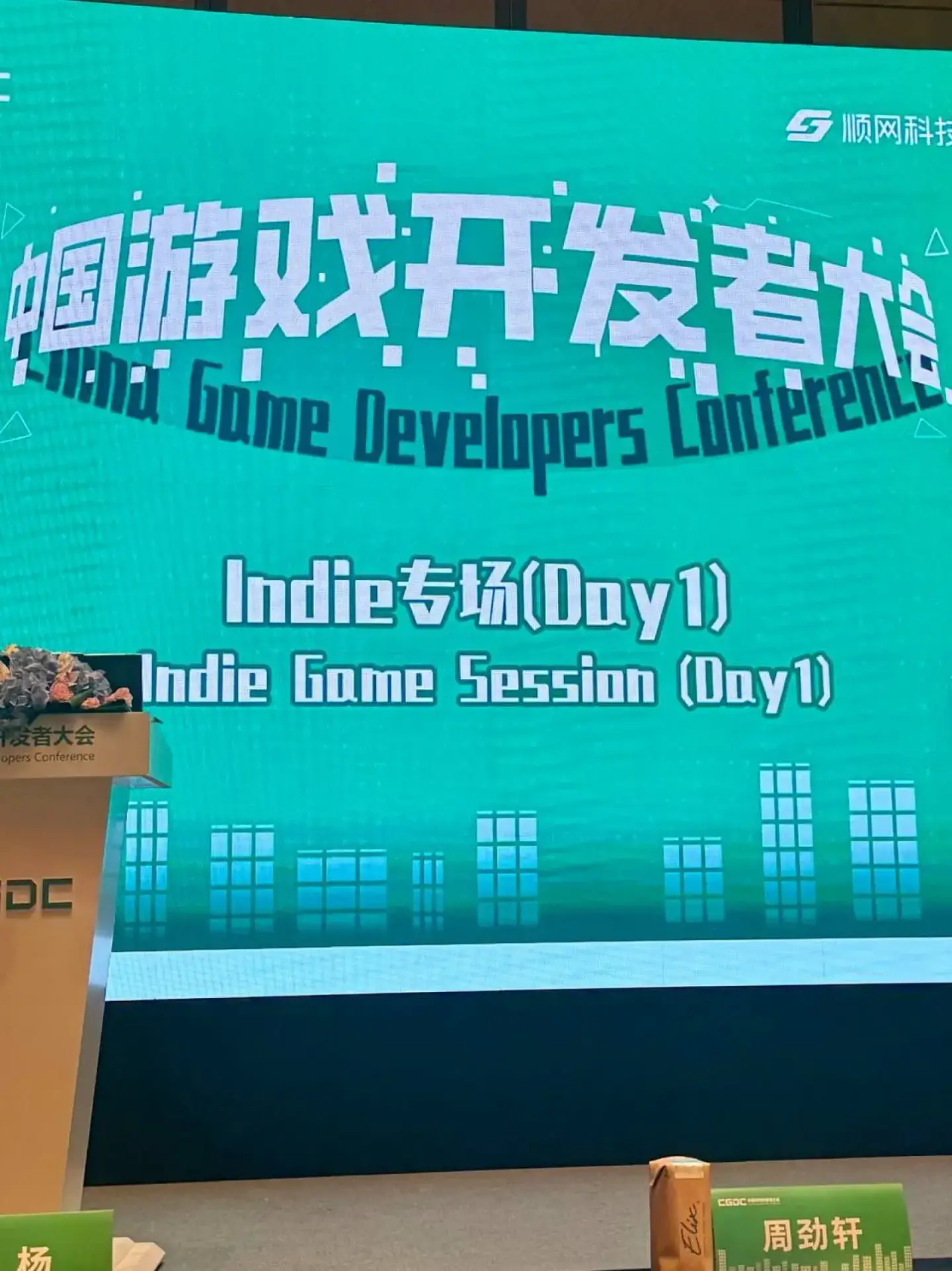
The conference track is two things running side by side. CDEC is the industry congress, the one with policy talks and market data. CGDC is the developer conference, two days of sessions sorted by genre and by discipline. I spent my time in CGDC.
The indie session
The session I did not expect to be the highlight was the indie one.
What struck me was how unromantic the talks were. Nobody stood on stage to say that passion is enough. They talked about wishlist curves, about which festival slot actually moves the needle, about the gap between a Steam page that looks finished and a Steam page that converts. Several teams walked through their launch numbers on screen, including the parts that did not work.
And they finish their games. That sounds like a low bar until you count how many projects you personally know that died at 70 percent. The teams presenting had shipped, and the sessions were mostly about the unglamorous last stretch: scope cuts, store page iteration, and deciding when the thing is done.
Kingdom Come and Cyberpunk
The other half of the day was the opposite scale. Speakers from Warhorse Studios, the team behind Kingdom Come: Deliverance, and from CD Projekt Red, whose director Paweł Sasko keynoted the congress, along with Moon Studios.
What carried over from those talks was less about technique than about how long the runway is on a game like that, and how many decisions you make years before anyone can tell you whether they were right. Sitting in a room in Shanghai listening to the people who built The Witcher and Cyberpunk talk about their own missteps is a strange kind of reassurance.
Day two: the B2B floor
The BTOB hall is 25,000 square metres, over 500 companies, and close to half of them international. This is where the show stops being a spectacle and starts being work.
I came out of that day with a stack of business cards and a genuinely full calendar. A few threads worth writing down.
Developers
There were a lot of small teams showing games, many of them in the Indie Game Zone that Game Connection runs inside the B2B area in Hall W4, with its own showcase stage and awards. More than a thousand playable demos were on the show floor across the event, and over 600 games registered for the Steam festival running alongside it.
The games were small. Small in scope, small in team size, sometimes assembled on someone's kitchen table. They were also, in a lot of cases, more interesting to talk about than the big-budget booths downstairs. Some of these teams had picked up funding from Chinese partners; others were entirely self-funded and treating the trip as their marketing budget for the year. The common factor was that they were all genuinely lit up about what they were building, which is contagious in a way that no keynote is.
Publishers
Publishers were out in force, and the conversations were more specific than I expected. Not "send us your deck" but "here is the genre we are short on this year, here is what our UA looks like in these markets, here is what we would need from you."
AI 3D content: Meshy, Neural4D, Tripo
The theme was AI and the floor delivered on it, but the part relevant to my work was the image-to-3D vendors.
I already knew Meshy AI and Tripo AI as tools; at ChinaJoy I met the people. Neural4D was new to me. It is built by DreamTech on their own Direct3D and Direct3D-S2 architecture, generating meshes from a prompt or a single photo with PBR textures and topology that is meant to survive contact with an actual engine.
That last part is the whole question with this category. Generating something mesh-shaped has been solved for a while. Generating something a technical artist does not immediately rebuild is the harder problem, and all three companies know it, which is why the pitches now lead with topology and UVs rather than with the demo reel. For prototyping and for filling out a scene, the tooling has crossed the line from novelty to useful.
Infrastructure and payments
Less photogenic, equally useful. Server and network providers with capacity inside China, which is a different conversation from anywhere else, and Cloudflare for the edge side of it.
I also spent a while with the management team at Link, a payment provider, and with the founders of ThinkingAI, a marketing platform. Both turned into real conversations about where our interests overlap. The ThinkingAI people I also ended up at an afterparty with, which is the honest way a lot of these relationships start.
That is the thing about the B2B floor that a schedule does not capture. The scheduled meetings produce follow-ups. The unscheduled ones — the queue for coffee, the table you end up sharing at 11pm — produce the ones you remember.
VK Play and RuStore
Both Russian platforms were on the floor, and both were there to bring games to Russia. Straightforward pitch, clearly resourced, and worth a look for anyone with a catalogue and no distribution in that market.
Day three: the consumer halls
Then the badge changes meaning entirely.
The B2C side is 120,000 square metres and over 350 exhibitors. For scale: ChinaJoy 2025 pulled more than 410,000 visitors over four days, and this year did not feel smaller.

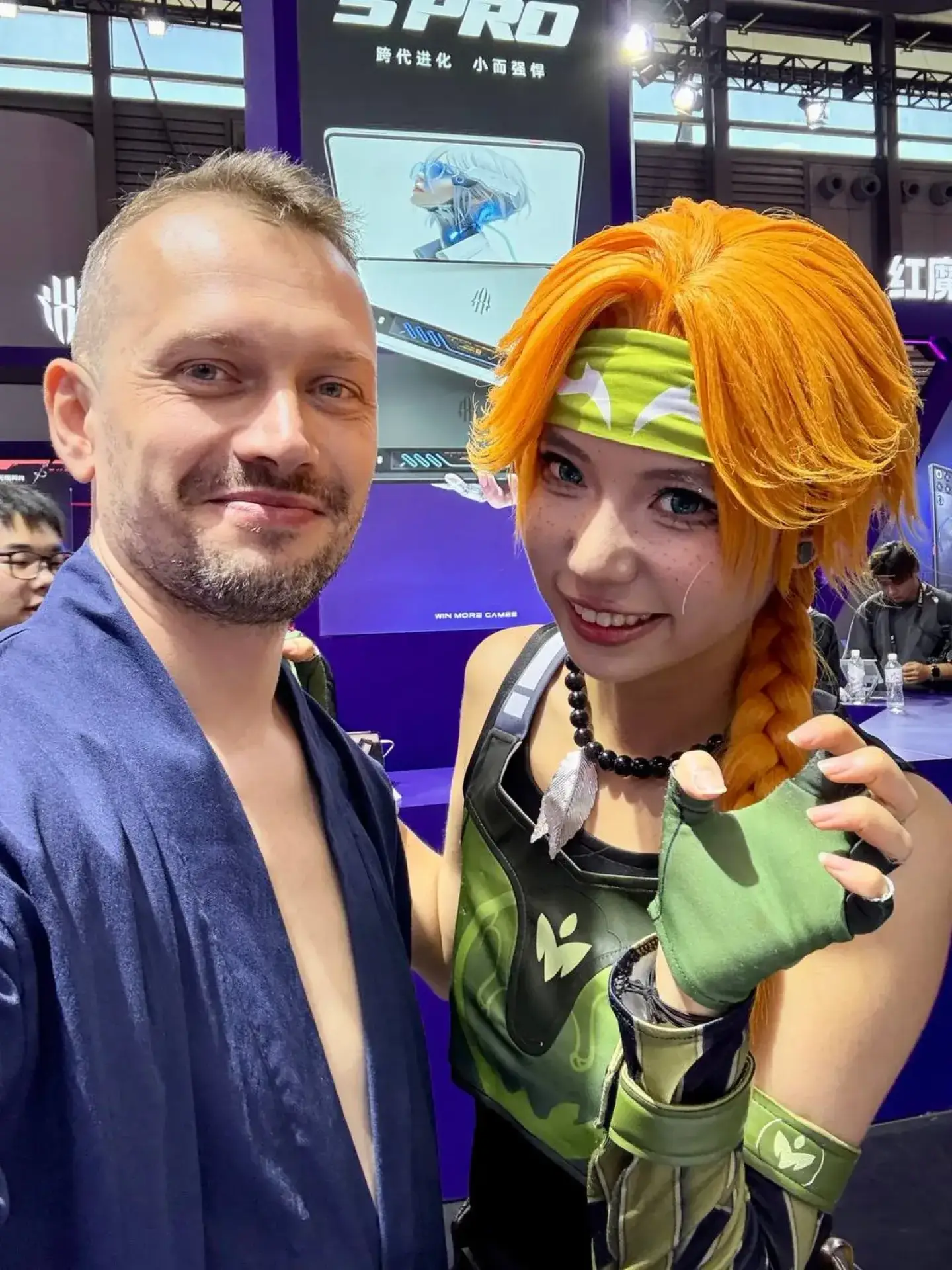
The cosplay is the first thing anyone mentions about ChinaJoy and it deserves the reputation. The costume work was extraordinary, the crowd was in a good mood all day, and the whole hall had an energy that trade shows in Europe do not manage. I took an absurd number of photos and joined whatever activities the booths were running, which is how I came home with a bag of merch I did not plan for.
Between the queues there was a real lineup to see: new MMOs, new shooters, a surprising volume of simulators, and a hardware section that was doing more experimenting than I expected. Handhelds, displays, and input devices that have not made it out of the region yet.
What I took home
A few things I keep coming back to.
The distance between an indie team and a AAA studio is smaller in the problems than in the budget. Both stages spent most of their time on scope, on cutting, and on the last 20 percent. The zeros on the end change, the shape of the difficulty does not.
AI tooling has stopped being the pitch and become the plumbing. The theme of the show was AI, but the interesting vendors were not selling AI. They were selling shorter asset pipelines, cheaper localisation, better UA targeting, and the AI part was an implementation detail. That is what a technology looks like when it stops being news.
The show is worth attending for the corridor, not the calendar. Everything on my schedule I could have arranged over email. Everything that turned into something new happened between the scheduled items.
Go to the consumer hall. It is easy to treat the B2C days as the part for other people. It is the only place at the entire event where you get to watch several hundred thousand players decide what they actually care about, in real time, with their feet.
I will be back next year, with a shorter meeting schedule and better shoes.
Sources for the event figures quoted above: ChinaJoy official site, Inven Global, PocketGamer.biz, Game Connection x ChinaJoy.